
Updated: June 26, 2026
Explained: The 4-Part Process
of Resolving Reactivity
Resolve the Roots, Condition the No, Offer the Choice, and Change the Picture.
Written by: Jon Somers
Reviewed by: Matt Cochran, Professional Dog Trainer
Nothing in this article is going to sound groundbreaking.
And yet the results it gets with reactive dogs, even in the hands of everyday owners with zero training background, are hard for most people to believe.
“This program changed his life! He now will not bark at people or dogs we walk by.”
“Things she used to react to on a daily basis, ( loud noises, walkers, scooters and skate boards ) don’t seem to bother her anymore.”
“her entire outlook on people, and dogs especially, has changed completely!”
These are excerpts from reviews left by Resolving Reactivity members — everyday dog owners who achieved dramatic transformations with their dogs…
And they’re just a tiny fraction of the success this 4-Part Process is getting people and dogs, even outside of Resolving Reactivity.
But how?
What is the miraculous secret solution to these almost-too-good-to-be-true success stories?
It’s not flashy. It’s not complicated. And it makes perfect sense. And that’s exactly why it works.
Let’s break it down.
Part 1: Resolve the Roots
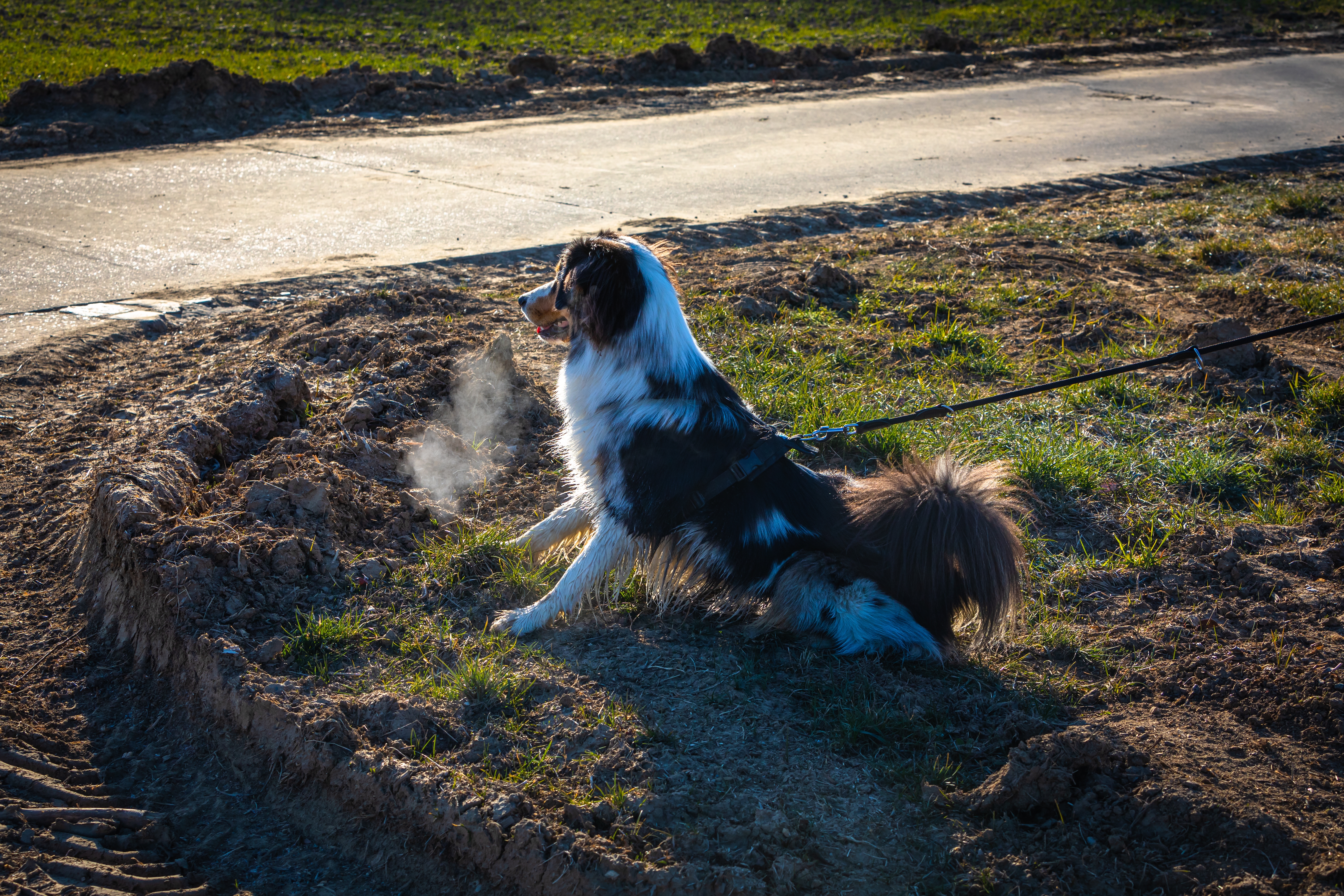
Reactivity does not come from nowhere. It does not just pop in, out of the blue, like a random disease or disorder.
Reactivity is a symptom.
The barking, the lunging, the spinning at the end of the leash… these are symptoms of a deeper issue inside.
Broadly speaking, there are 4 Roots Causes of Reactivity.
They are:
- Frustration
- Fear
- Misplaced Genetics
- Lack of Fulfillment
If you want to learn more about the 4 Roots of Reactivity, you can read that here →
If you try to address the reactive behavior head-on without first building the foundation underneath, you will usually make the problem worse. Or at best, you end up managing the symptoms forever.
That’s why Part 1 is to Resolve the Roots.
But building a foundation doesn't mean drilling endless obedience.
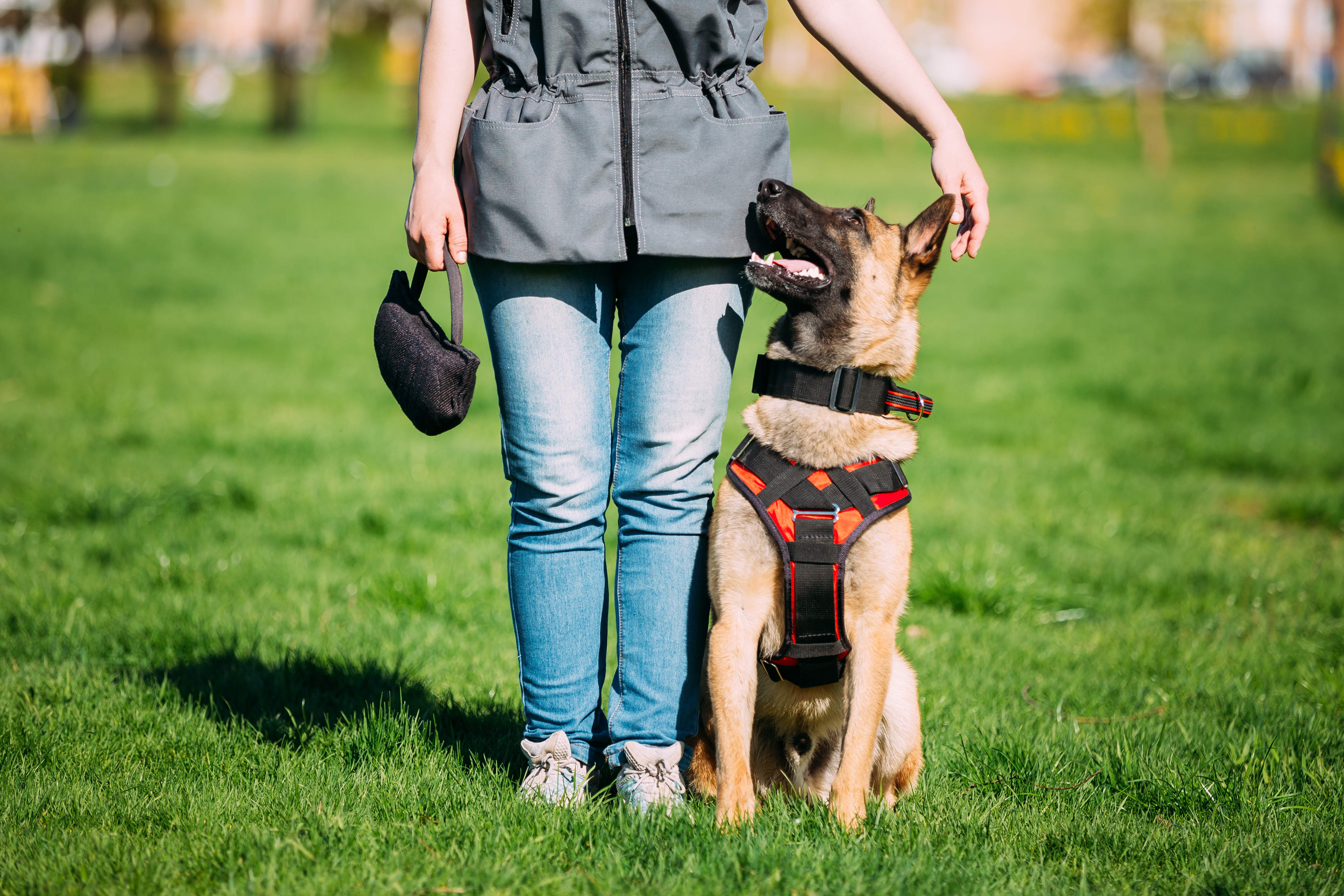
Your dog doesn't need a competition heel. They don't need to hold a place command for twenty minutes or check in with you every ten seconds on a walk.
That is management. And if you pile on enough of it (often with a Trazodone prescription stacked on top), it can sometimes keep a lid on the reactivity.
But it never fixes it.
In order to resolve each of the 4 root causes of reactivity, you need to build these 5 foundational pillars.
- Fulfillment — meeting their real, biological needs
- Cooperation — teaching them that working with you is the path to good things
- Authority — earning the right to make decisions your dog actually respects
- Impulse control — creating a gap between the urge and the action
- Confidence — in themselves, and in you as their handler
When those five are in place, the roots get solved almost on their own.
Fulfillment solves Lack of Fulfillment (shocker).
Fulfillment & cooperation together take care of frustration.
Fulfillment, Authority & impulse control handle misplaced genetics.
And with enough time, all five working together heal fearfulness and anxiety.
Side note: Notice how fulfillment shows up in every single one of those. It’s pretty important!
Now ask yourself how many trainers and behaviorists you've come across who put real, biological fulfillment at the center of their program… It's not many.
But how do you actually build this foundation? In Resolving Reactivity, we teach the easiest & simplest method. We call it the Total Walk.
The Total Walk is too much to cover here... it's a whole article on its own. But you can learn more about that by clicking here →
But what’s important to remember is that resolving the roots isn't a box you check and move past. It's not week one through four and then you're done forever.
Fulfillment especially is for life.
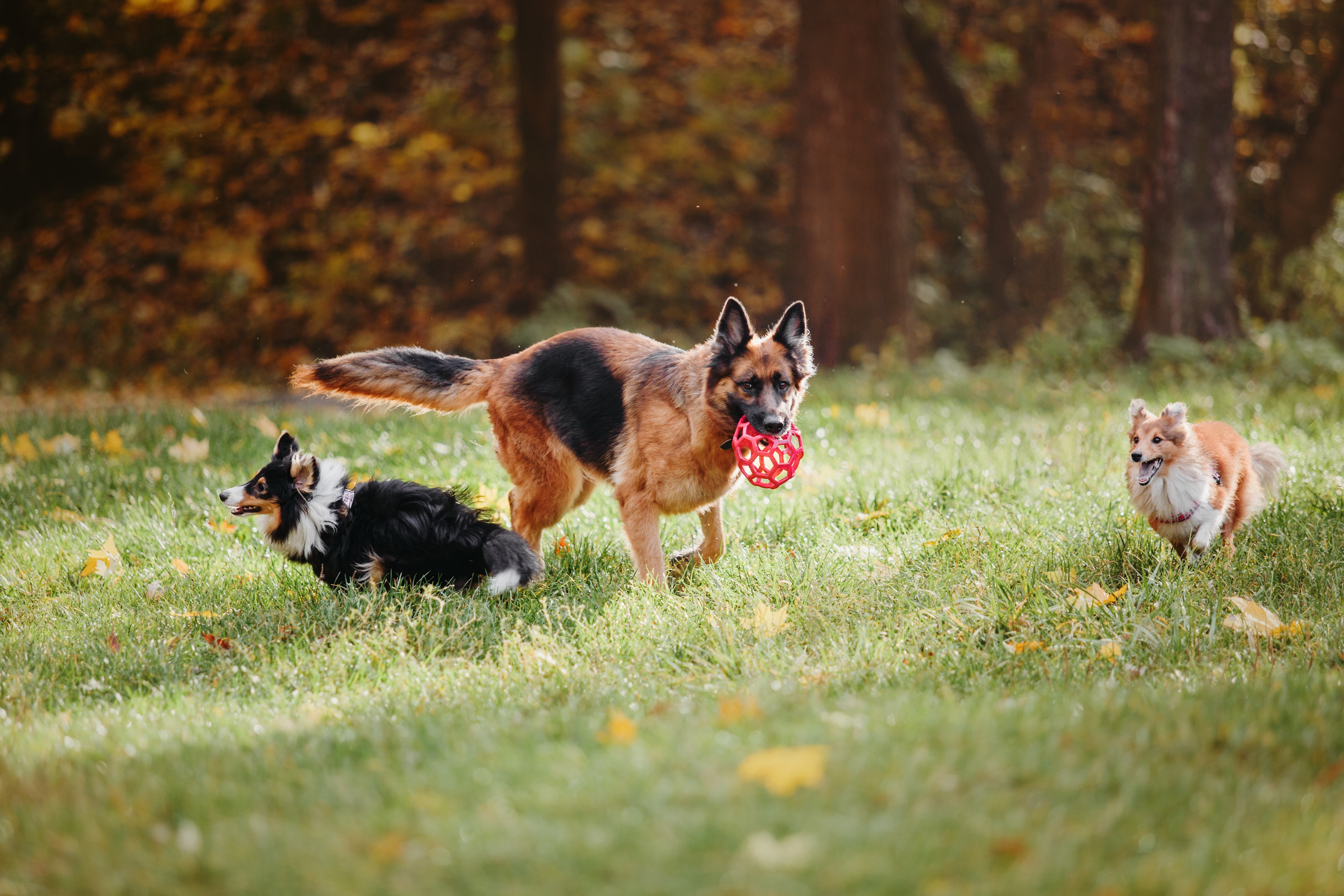
However you choose to meet your dog's needs... the Total Walk, fetch, tug-of-war, herding sheep, whatever... that's not a temporary fix to get through the course and stop the reactivity. That's what your dog needs for the rest of their life.
Dogs aren't stuffed animals you keep on a shelf. They're animals with real needs to run, sniff, chase, and use their brains. If those needs go unmet, the reactivity can bubble back up.
The good news is it gets easier. Way easier.
What feels like a lot of work in the first few weeks becomes second nature. It stops feeling like a training program and just becomes how you and your dog live.
Now, once you’ve built a solid (not perfect!) foundation to build off of, you layer in Part 2.
Part 2: Condition the No
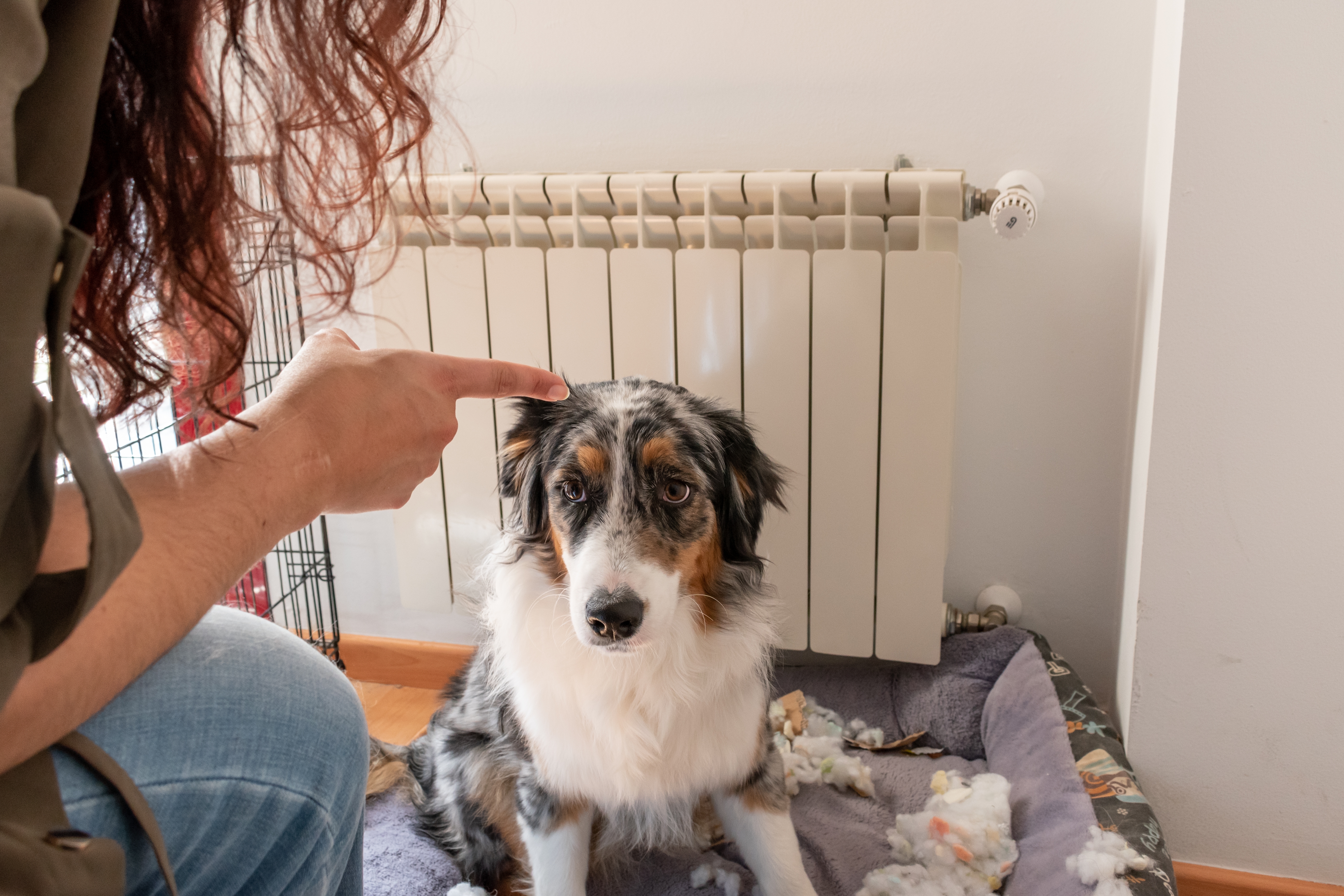
For most dogs, “no” does not mean what owners think it means.
To the owner, it means: stop that.
To the dog, it often means nothing at all.
The owner has said it ten thousand times...
"no, off the couch, no, leave it, no, stop pulling…”
And it's never once been followed-through on by anything. So the dog learned it’s meaningless. It can be ignored.
Think about a clicker. The click works because every click has been followed by a reward, over and over, until the sound itself carries meaning.
Now imagine clicking for weeks with no treat ever following. How long before that clicker is useless?
That's what happened to "no." Every empty "no" drained a little more meaning out of it, until there was nothing left.
Part 2 is where you rebuild the power in your “no.”
The technical term for this is a conditioned punisher.
That sounds harsher than it is. It simply means your dog has learned that a specific word matters because a clear consequence follows it.
The same way "yes" earns its power from good things following, "no" earns its power from a fair consequence following.
We call the finished product the "Never Again No."
It is a correction where you make it absolutely clear to your dog that the choice they just made is not acceptable.
They cannot do that.
And I want to be very clear about this: it is not about force or pain.
It is a clear and fair correction that communicates to your dog, in a way they understand, that this is a boundary they cannot cross.
In fact, in the vast majority of cases, it's incredibly effective with just your voice because of how you train it in low-stakes situations first, and build up its power bit by bit.
But what makes it the "Never Again No" is your sincerity. You have to genuinely mean it.
Dogs are extremely sensitive to the emotions of the people closest to them.
When you have built a real relationship with your dog, your approval matters. Your disapproval matters too.
So when “no” is clear, fair, and backed by real follow-through, it carries weight.
This is what's called social pressure. And it's the key to why the ‘Never Again No’ works so well.
You're communicating to your dog with your emotions that they can never do that again.
And once they understand that, then you move on to Part 3.
Part 3: Offer the Choice
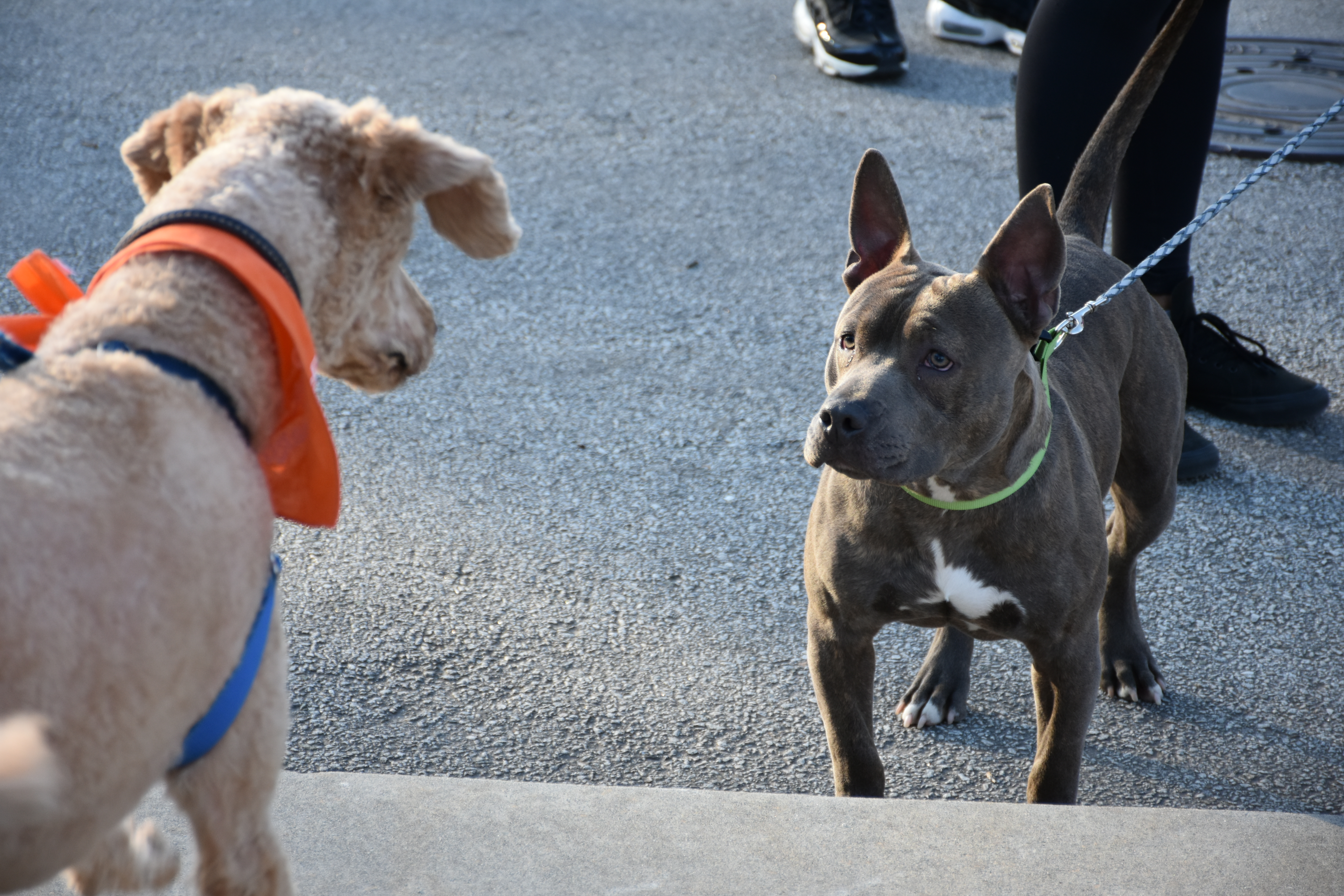
For months, maybe years, you've been managing.
Crossing the street.
Skipping the busy trail.
Walking at 6am so you won't run into anyone.
Blocking, redirecting, steering your dog away from anything that might set them off.
Not with a setup with helpers and cones in a parking lot. You just keep doing the exact same routine from Part 1... your Total Walks, your fulfillment, your daily life... except now you stop arranging the whole world to avoid triggers. You let life happen naturally.
And when a trigger shows up, you don’t immediately jump in and take the choice away.
Sure, you stay present and prepared. But you give your dog a chance to make the right decision.
This is the hard part to swallow.
For months your instinct has been to step in the instant your dog notices something. In Part 3, you hold that instinct back. You let your dog notice the trigger, process what they’re feeling, and show you what choice they are going to make.
You offer them the freedom to choose their own response.
So many people are always stunned when their dogs just… don’t react. But it’s incredibly common.
They see the other dog. They load up a little. You can watch the old pattern start to fire... and then they stop themselves. They look away. They glance at you. They just keep moving.
That moment is everything. Your dog weighed it out and made a different call, on their own. The behavior that used to run on autopilot just lost.
You will never get that moment if you step in and take the choice away. The freedom to choose is the whole point.
But sometimes they choose wrong. Sometimes they react anyway. And that’s okay.
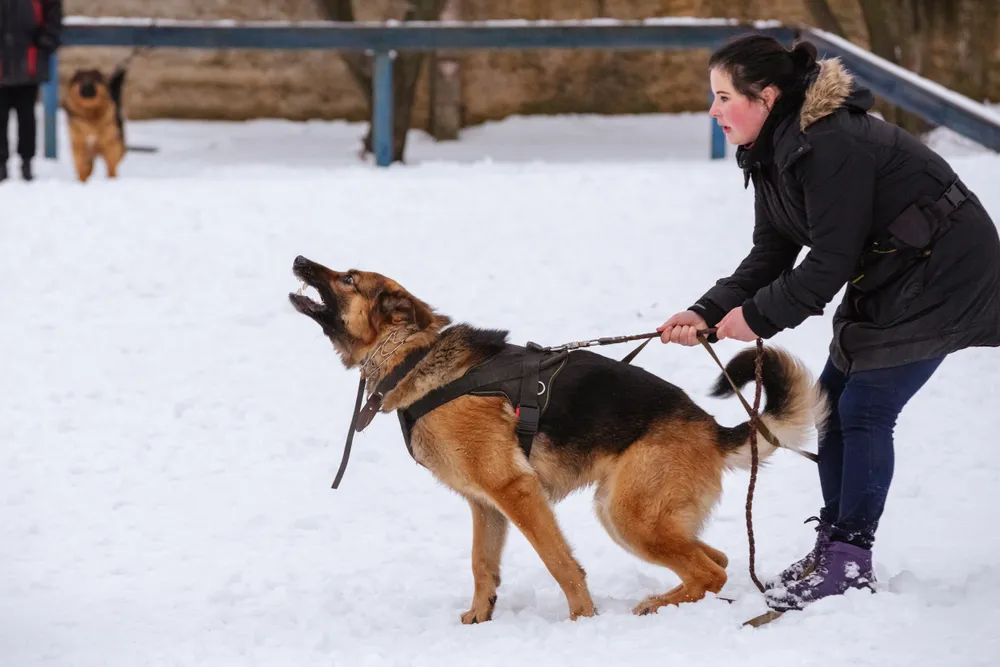
Because that’s why we conditioned a strong “Never Again No.” This is where you use it.
Then you keep living your life.
The next time a trigger shows up, you offer the choice again.
If they react, the “no” is there.
If they choose well, nothing dramatic happens. Life just goes on.
Rep by rep, the old reaction shows up weaker & shorter. Until one day the trigger appears and your dog notices it, and just keeps walking.
That's the finish line for Part 3. Not a dog who loves every dog at the park. A dog who sees the trigger and feels almost nothing. The trigger becomes background noise, the same way a parked car or a mailbox is background noise. (Ok maybe not that much!)
We call that neutrality. Your dog knows reacting isn't an option anymore, and they've accepted it and moved on.
For a lot of owners, that alone is the dream.
The reactivity is gone.
There’s no more dread, no more 6am walks. There’s no more planning your life around avoiding every trigger.
You can take your dog out into the world again without every walk feeling like a tactical mission.
Which brings us to the 4th and final part.
Part 4: Change the Picture
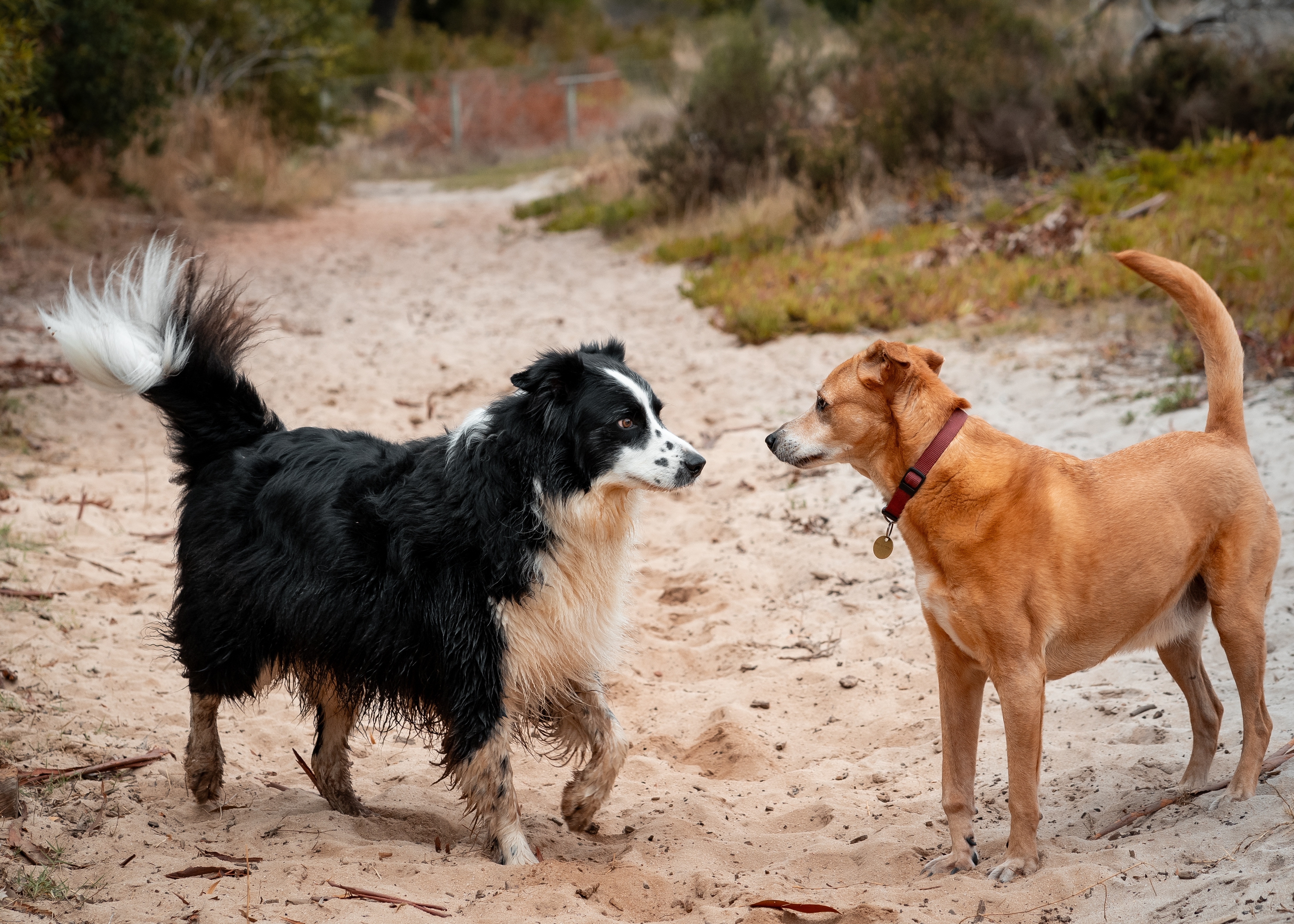
Neutrality is a beautiful place to be.
For a lot of dogs and owners, it is enough.
But it does not have to be the end of the road.
Part 4 is about everything that becomes possible once the reactivity is behind you. Taking your dog from "I know I can't react" to actually living a full life back in the world.
The picture of the triggers in your dog's head used to be extremely negative.
By this point, you’ve now changed it to be neutral. Now you get to see how far past that you can go.
For a lot of dogs, that means moving from neutral toward genuinely enjoying the world again. Relaxed on a patio. Loose around the right dogs. Comfortable in places that used to be off-limits.
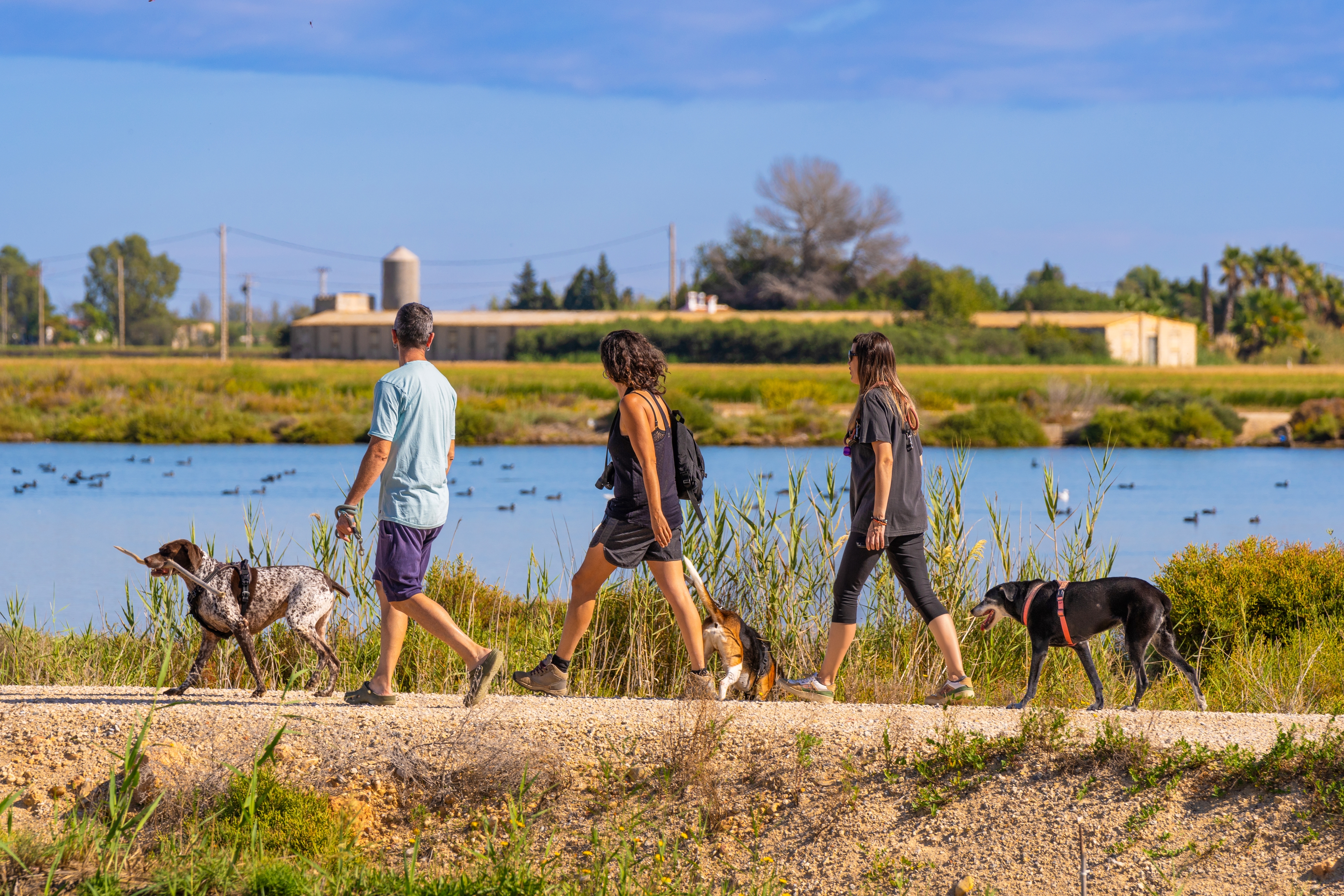
Most of the time, the real ceiling on how far this goes isn't your dog. It's you.
Even after your dog changes, the old memories don't just vanish. You still remember being dragged down the sidewalk while strangers stared. That weight sits in your body, and it can quietly stop you from ever testing whether your dog has actually moved on.
That's normal. Trusting the change in your gut takes longer than trusting it in your head.
The only way to find out how far your dog can go is to gently push the edge and let them show you. Most of the time, they'll surprise you. And on the rare day they don't, it's not a catastrophe. You remind them of the line and give them another chance later.
You set the ceiling from here. That's not a burden, it's the whole point. The reactivity that ran your life is behind you. What you and your dog do with that freedom is finally up to you.
Why This Process Works
Step back and look at the whole thing.
You resolve the roots so your dog is calmer and more capable before they ever face a trigger.
You condition a clear “no” so you have a fair way to communicate when a real line gets crossed.
You offer the choice, correct the reactions, and let calm decisions become the new pattern.
Then, once the reactivity is no longer running your life, you start rebuilding a bigger life together.
Four parts. In order. None of them flashy.
That's the whole "secret." It's not a trick or a tool or a magic word. It's a process that respects how dogs actually learn, run in the right sequence.
Boring, simple, and logical. Which is exactly why it works when everything else hasn't.
If you want the full step-by-step version, that is what Resolving Reactivity teaches.
The Total Walk.
The foundation building.
The “Never Again No.”
And real demonstrations with reactive dogs, so you can see what each step actually looks like.